Welcome to Planet Irf Books. Where you can find plenty of pre-loved books in mint condition and at extremely competitive prices. Find a book you like? Just e-mail Irf at sydneylawyers@gmail.com. All prices include postage anywhere in Australia.
Thursday, July 29, 2021
SOLD A definitive work on torture and the rule of law
An anthology of top Kiwi travel writing
Mint condition. PB. 200pp. $20 including postage anywhere in Australia.
This anthology of travel essays from 12 of New Zealand's best-known writers documents a wide range of personal experiences, from Joy Cowley's stint in Alaskan villages, where hunting is part of the daily business of survival, to Barbara Else's working tour of London and Manchester.
Travel with Graeme Lay in heady Tahiti, take an African safari in Zimbabwe with Catharina van Bohemen, experience Corsica with Sarah Quigley, and Joy MacKenzie's Paris.
Follow Lloyd Jones as he explores Brooklyn, a world away from the safe environment back home, Michaeanne Forser searching for passion in Mexico, and visit the silica terraces and hot pools of Tessa Duder's Turkey.
Peter Wells goes to Sydney, a city 'ripe for the millennium', CK Stead travels to Croatia, and Chris Orsman explores Antarctica, a continent etched with a brittle history.
Tuesday, July 27, 2021
Travels through the Balkans, the Middle East & the Caucasus
Kaplan takes us on a spellbinding journey into the heart of a volatile region, stretching from Hungary and Romania to the far shores of the oil-rich Caspian Sea.
An anthology of profiles by a leading Australian journalist
Using a combination of impeccable research, fearless interrogation, an acute eye for the detail and a deft touch with the pen, Leser has drawn profiles of characters who are in turns triumphant, tragic, brilliant, fatally flawed, courageous and compassionate.
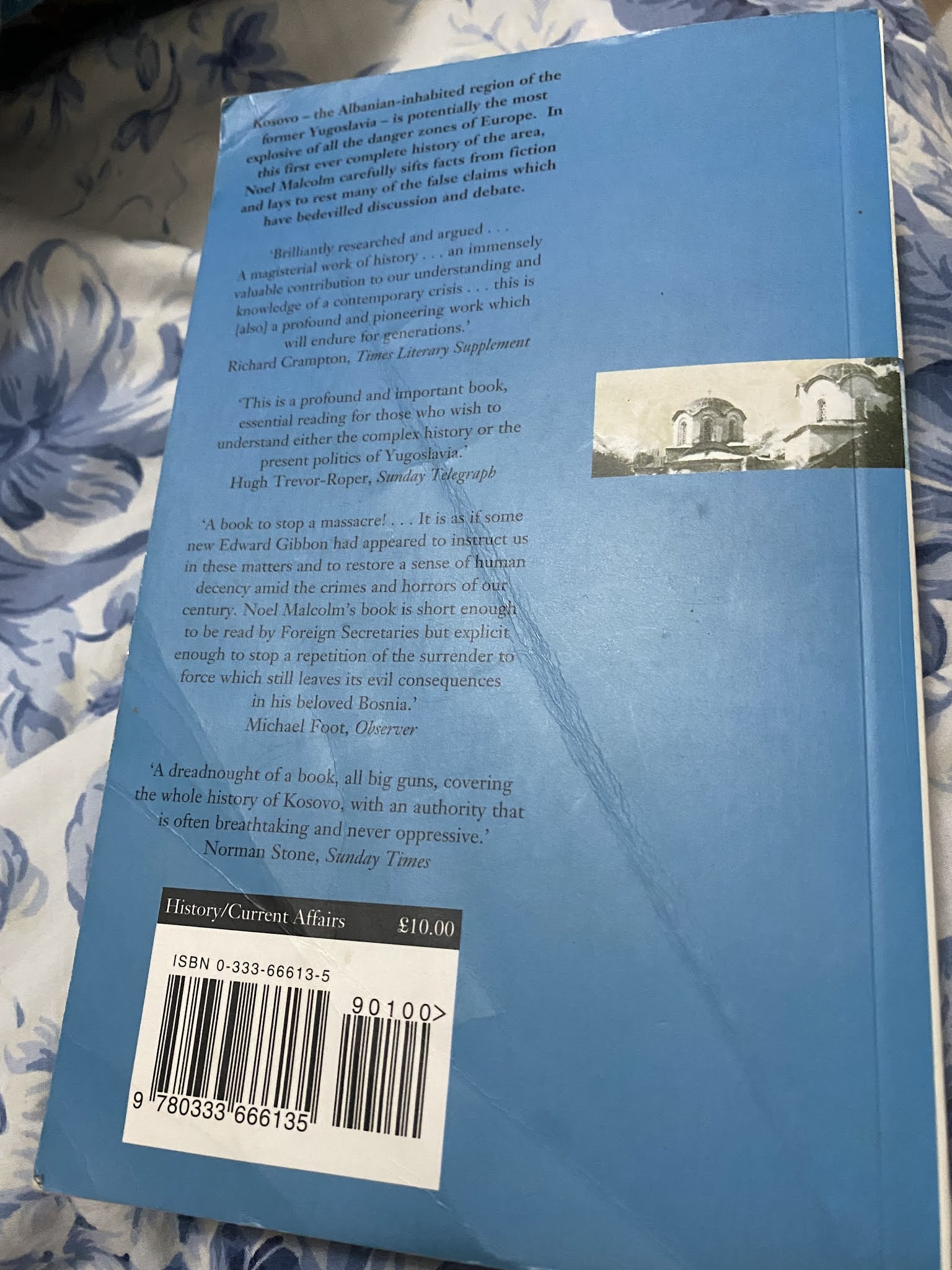
A short history of Kosovo
Friday, July 23, 2021
Memoir of one of Australia's most loved economists
Thrown into the deep end as a cadet journalist, Ross covered his first mini-budget lockup in 1974, and was soon covering the financial roller coaster ridden by the Whitlam government. From then on, no government and no treasurer has escaped analysis - he anoints Keating, Costello, and Swan as his three best - and throughout the book he critiques without fear or favour the ministers and bureaucrats who have shaped our economic wellbeing.
This son of a Salvation Army major and one-time accountant is an old school journo through and through. With four decades of printers' ink in his veins, he dissects the newspaper game, remembers the great editors and journalists who have sharpened our minds and his, and lays down some hard facts about a hard future.
Honest, robust and intelligent, Gittins is as insightful and entertaining as the man himself.
A Dutchman and his dog travel across America
Following in Steinbeck's footsteps, half a century on from Travels With Charley
In 1960 John Steinbeck and his dog Charley set out in their green pickup truck to rediscover the soul of America, visiting small towns and cities from New York to New Orleans.The trip became Travels With Charley, one of his best-loved books.
Half a century on, Geert Mak sets off from Steinbeck’s home. Mile after mile, as he retraces Steinbeck’s footsteps through the potato fields of Maine to the endless prairies of the Midwest and stumbles across glistening suburbs and boarded-up stores, Mak searches for the roots of America and what remains of the world Steinbeck describes. How has America changed in the last fifty years; what remains of the American dream; and what do Europe and America now have in common?
About the author
Geert Mak is a journalist and historian, and the internationally acclaimed author of In Europe,In America, Amsterdam and The Bridge. He is one of the Netherlands’ bestselling authors, has twice been awarded Historian of the Year and his books have been translated into more than 20 languages.
Tracking the Gobi Desert in the steps of Genghis Khan
He studied German and French at Keble College, Oxford, before doing two postgraduate courses, a diploma in the History and Philosophy of Science at Oxford and Mongolian at the School of Oriental and African Studies, completing the latter in 1968. After working in journalism with Reuters and in publishing with Time-Life Books, he turned to writing, with occasional forays into film, TV and radio.
In the 1990s, he began a trilogy on the three major revolutions in writing: writing itself, the alphabet and printing with movable type. This has so far resulted in two books, Alpha Beta and The Gutenberg Revolution, both republished in 2009. The third, on the origin of writing, is on hold, because it depends on access to Iraq.
He returned to the subject of Mongolia with Gobi: Tracking the Desert, the first book on the region since the 1920s. Work in Mongolia led to Genghis Khan: Life, Death and Resurrection, which has so far appeared in 18 languages. Attila the Hun and Kublai Khan: The Mongol King Who Remade China completed a trilogy on Asian leaders. A revised edition of his book on Genghis Khan, with the results of an expedition up the mountain on which he is supposed to be buried, was upcoming in autumn 2010.
The Terracotta Army coincided with the British Museum exhibition (September 2007- April 2008). This was followed by The Great Wall. The Leadership Secrets of Genghis Khan combines history and leadership theory. Xanadu: Marco Polo and the Discovery of the East was published in autumn 2009, and Samurai: The Last Warrior, the story of Saigō Takamori's doomed 1877 rebellion against the Japanese emperor, was published in February 2011.
In 2007 John Man was awarded Mongolia's Friendship Medal for his contributions to UK-Mongolian relations.
SOLD A lone Kiwi travels across Mongolia
Travels through China's places of pilgrimage
Good condition. PB. 339pp. $20 including postage anywhere in Australia.
To walk through China is to walk on holy ground. Travels Through Sacred China is a guide to the soul of China. It is also a guidebook which enters into the spirit of Tao.
A revealing guide to China's guide to the vast religious and spiritual heritage
This book explains why to understand the soul of China you must see the sacred in China, which is there in the designs of the buildings, the street plans of the cities, in the household shrines at the back of shops, and in the concept that the very land of China itself is sacred. It presents the fundamental sacred ideas that lie at the heart of this ancient land, and is also a guidebook which enters into the spirit of the Dao, through which the culture and traditions of China are brought to life.
About the author
Martin Palmer is a regular contributor to the BBC on religious, ethical, and historical issues, and appears regularly on both BBC radio and TV, including the World Service. He is also a well-known translator of Chinese classical texts such as the Dao De Jing and the Shang Shu, and is an advisor to the China Taoist Association, the Mongolian Buddhist Sangha, and the World Council of Churches as well as heading the Alliance of Religions and Conservation.
SOLD Hanif Kureishi writes about his father
Following the discovery of an unfinished manuscript written by his father, Kureishi looks back on his own development as a writer in the light of his father s unrealised literary ambitions
When Hanif Kureishi discovers an abandoned manuscript of his father's his understanding of the family history is transformed. So begins a journey which takes Kureishi through his father's privileged childhood by the sea in Bombay, to the trauma of partition and to his adult life hidden away in the suburbs of Bromley - his days spent as a minor functionary in the Pakistan embassy in London, his nights writing prose, hopeful of one day receiving literary recognition. This is a book about his father's failed career as a writer and the beginnings of Kureishi's successful career as one - as his father looks on with pride and perhaps envy.
A powerful work on religion and justice
From the bestselling author of God’s Politics, a seminal call to reintegrate politics and spirituality
“A tremendous and timely book . . . just what the doctor ordered for a hardened, cynical, and disheartened and disillusioned world.” —Archbishop Desmond Tutu
Jim Wallis’s classic The Soul of Politics, originally published by The New Press in 1994 and now available in a new hardcover edition, has sold 60,000 copies to date and has been widely praised for its prescience and passion. In fact, no issue has become more topical or polarizing in the United States than the intersection of religion and politics, with the country seemingly irreconcilably split between the “religious right” and the “secular left.”
In this “dynamic, hopeful” (The Nation) book, Wallis, the nationally known activist, preacher, and editor of Sojourners magazine, shows why both the traditional liberal and conservative visions are inadequate to the challenge before us, and outlines instead a new political morality combining social justice with individual responsibility.
Arguing that we need to look beyond the traditional corridors of power to find the resources for a political movement that will foster true democracy—emphasizing compassion, community, racial reconciliation, gender equality, justice, imagination, and joy—The Soul of Politics “speaks to how all Americans—not just churchgoers—need to take personal responsibility for change rather than rely on politicians” (Cleveland Plain Dealer).
Reviving faith in politics without theocratic BS
SOLD Travels through wild Indonesia
Judith Lucy's hilarious family memoir
So Judith decided it was time to write the full story of her parents and her childhood.
Judith Lucy is one of Australia's best-known comedians; this is her first work.
Australian history and futures
The bestselling author of The Australian Moment asks the most important question confronting the country right now – how do we maintain our winning streak?
Most nations don't get a first chance to prosper. Australia is on its second. For the best part of the nineteenth century, Australia was the world's richest country, a pioneer for democracy and a magnet for migrants. Yet our last big boom was followed by a fifty-year bust as we lost our luck, our riches and our nerve, and shut our doors on the world. Now we're back on top, in the position where history tells us we made our biggest mistakes. Can we learn from our past and cement our place as one of the world's great nations?
Showing that our future is in our foundation, Australia's Second Chance goes back to 1788, the first contact between locals and migrants, to bring us a unique and fascinating view of the key events of our past right through to the present day. With newly available economic data and fresh interviews with former leaders (including the last major interview with Malcolm Fraser), George Megalogenis crunches the numbers and weaves our history into a compelling thesis, brilliantly chronicling our dialogue with the world and bringing fresh insight into the urgent question of who we are, and what we can become.
'Megalogenis has emerged as something of a polymath. He slaps history and politics and culture like mortar in and around his knowledge of economics and numbers to build compelling, even thrilling, theses about the country of his birth and where it stands in the world.' Tony Wright, Saturday Age
Mafia in the Australian outback
'Donald Mackay was not just an innocent victim tragically struck down by a criminal act. He was a casualty of the actual fight against organised crime ... killed on active service, as it were ... His name should never be forgotten, his passing must not be allowed to be in vain.'
The assassination of Donald Mackay was meant to solve a problem for the mafia. Instead it roused the law-abiding citizens of Griffith to fight against the powerful criminal elements who had made their town synonymous with drugs and murder.
Drawing on the personal diaries and memories of Terry Jones - who, as the editor of the local newspaper, knew everyone and heard everything - The Griffith Wars reveals startling new evidence about one of Australia's most notorious unsolved murders. It also powerfully recounts the struggle for the soul of a country town still battling to shake off its criminal past.
Terry Jones was a friend of Donald Mackay, a long-time resident of Griffith and editor of The Area News and The Griffith Times. His diaries form the basis of this book.
PJ O'Rourke pokes fun at himself and the world in this collection of his early journalism
The history of immersion journalism
Very rare book. Very good condition. PB. 336pp. $30 including postage anywhere in Australia.
New Journalism ... burst on to the American print media scene in the mid-'60s before withering slowly as the 1970s mired itself in detente, oversized clothing and stagflation. In the end, New Journalism vanished - a victim of tighter economic times, the relentless onslaught of television, the VCR and the stylistic excesses of the form itself.
For those unfamiliar with New Journalism, the rubric came to be applied to pieces of writing in popular magazines such as and that ran at great length, packed with detail, the writer's subjective observations and even - in the case of the man who came to be seen as the avatar of the form, Tom Wolfe - extended applications of onomatopoeia.
As Marc Weingarten shows in this thorough and highly readable history of long-form "immersion" journalism, what came to be known as New Journalism had in fact been around well before the 1960s (the term was invented by Wolfe, ever the self-promoter, in 1973). He nominates Jonathan Swift's satirical assault on Britain's occupation of Ireland, , written in 1729, as perhaps the first example of the Gonzo style later associated with Hunter S. Thompson.
(taken from a review published in the Sydney Morning Herald on 2 January 2006. You can read more here.)
Embarrassing tyrannies
Collected here are sixty-two powerful and often terrifying pieces selected from Index on Censorship's twenty-five years' worth of issues documenting and condemning tyranny.
The writings, many by such renowned authors as Nadine Gordimer, Arthur Miller, and Julio Cortazar, cover the issues with careful even-handedness. Ariel Dorfman writes from the experience of the Chilean dictatorship and imagines a training course for salesmen of torture equipment; Alexander Solzhenitsyn has a fragment of poetry recalling his own period in a labour camp in Kazakhstan; Wale Soginka writes powerfully in defense of Salman Rushdie―a truly disturbing piece.A great tribute to Index's achievements, this collection celebrates without being self-congratulatory. Its contributors provide elegant testimony to the human spirit's capacity for survival and its continuing struggle for freedom.
A collection of ancient and modern journalism
'A quite stunning collection. There are descriptions in this book so fresh that they sear themselves into the imagination.' Jeremy Paxman
Memoir of avoiding South Asian marriage
‘From the age of fourteen, I was aware my parents expected me to have an arranged marriage, a big Bollywood wedding. There was just one hitch: nobody asked me.’
For Sushi Das, growing up in 1970s London was a culturally messed-up time. Feminists were telling women they could be whatever they wanted, skinheads were yelling at dark-skinned foreigners to go home and The Boomtown Rats were singing about ‘Lookin’ after Number 1.’
While Sushi was fabricating intricate lies and plotting harebrained schemes to get to the pub and meet ‘undesirable elements’ – boys – her parents were on the hunt for a respectable Indian doctor for her to marry. But how do you turn your back on centuries of tradition without trashing your family’s honour? How do you break free of your parents’ stranglehold without casting off their embrace? And how do you explain to your strict dad why there’s a boy smoking in his living room and another one lurking in his garden?
Breaking free meant migrating to the other side of the world, only to find that life in Australia had unexpected consequences. This is an intelligent, often hilarious memoir and a fascinating look at one of the oldest traditions of Eastern culture, which aims to join two families in economic prosperity, but whose reality is not always so blissful.
About the author
Sushi Das is an award-winning British/Australian journalist of Indian origin who worked for The Age newspaper for 22 years. She held various roles including news editor, columnist and opinion editor. Educated and raised in London, she migrated to Australia in 1991 and began her career as a news reporter at Australian Associated Press. Her work, which often focuses on race relations, culture clash and equality for women, has been recognised with two Melbourne Press Club Quill awards, including Best Columnist. She is an experienced public speaker and currently works as a freelance columnist and writing consultant and as a researcher for RMIT ABC Fact Check. Her memoir Deranged Marriage has been taught as a school text at Victorian secondary schools.